Wednesday, 14 November 2012

Bank lobby chief Dallara in favor of giving Greece more lenient deficit reduction targets

ATHENS, Greece — Greece needs more lenient targets to reduce its budget deficit so that its economy can return to growth more quickly, the head of an international banking lobby said Wednesday.
Charles Dallara, managing director of the Institute of International Finance, said the 17 eurozone countries should find a better balance between policies that favor debt reduction and those that help growth.
An over-emphasis on budget cuts will cause the risk of a “protracted era” of recession or low-growth, he warned at a banking event in Athens.
Greece is approaching its sixth year of recession as it keeps cutting spending and raising taxes to comply with the demands of its international bailout.
“It’s my view that everything must be done to avoid this reality,” Dallara said of the deepening recession. “What is needed instead in my view is to ease the case of fiscal adjustment.”
Dallara led negotiations with Greece earlier this year to restructure the country’s debt held by the private sector, wiping some €100 billion off the national debt.
Despite that writedown, Greece’s debt load is still not falling quickly enough.
Its bailout creditors — the 16 other eurozone states and the International Monetary Fund — agreed in principle to give Greece more time to complete its current austerity measures, from 2014 to 2016. But they are still divided over whether to give Greece more time — until 2022 rather than the currently planned 2020 — to bring its debt down to a manageable level of 120 percent of GDP.
To help Greece, Dallara argued that the International Monetary Fund could increase its contribution in the bailout program and provide concessional rates reserved for poorer countries.
He said Greek governments had shown “impressive willingness to bear short-term pain for long-term gain” in passing a major new round of austerity cuts, approved last week and worth €13.5 billion ($17 billion).
Copyright 2012 The Associated Press. All rights reserved. This material may not be published, broadcast, rewritten or redistributed.
Tuesday, 13 November 2012
Sunday, 30 September 2012
How The Government’s Lies Become Truth
Dr. Paul Craig Roberts
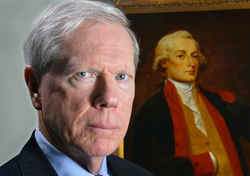
In my last column, “A Culture of Delusion,” I wrote that “Americans live in a matrix of lies. Lies dominate every policy discussion, every political decision.” This column will use two top news stories, Iranian nukes and Julian Assange, to illustrate how lies become “truth.”
The western Presstitute media uses every lie to demonize the Iranian government. On September 28 in a fit of unmitigated ignorance, the UK rag, Mail Online, called the president of Iran a “dictator.” The Iranian presidency is an office filled by popular election, and the authority of the office is subordinate to the ayatollahs. Assange is demonized alternatively as a rapist and a spy.
In my last column, “A Culture of Delusion,” I wrote that “Americans live in a matrix of lies. Lies dominate every policy discussion, every political decision.” This column will use two top news stories, Iranian nukes and Julian Assange, to illustrate how lies become “truth.”
The western Presstitute media uses every lie to demonize the Iranian government. On September 28 in a fit of unmitigated ignorance, the UK rag, Mail Online, called the president of Iran a “dictator.” The Iranian presidency is an office filled by popular election, and the authority of the office is subordinate to the ayatollahs. Assange is demonized alternatively as a rapist and a spy.
Friday, 28 September 2012
14 Signs That The World Economy Is Getting Weaker

The United States is not the only one with massive economic problems right now. The truth is that just about wherever you look around the globe things are getting even worse. China is experiencing a substantial economic slowdown, and Japan has resorted to yet another round of money printing in an effort to keep the Japanese economy moving. Unemployment in Europe continues to get even worse, and the riots this week in Spain and in Greece have been absolutely frightening at times. In the United States there are a whole host of signs that another recession is approaching, and the number of American CEOs that say that they plan to eliminate jobs in the coming months is rapidly rising. The world economy is more interconnected today than ever before, and that means that we are all in this together. Just remember what happened back in 2008 and 2009. The economic pain that started on Wall Street was felt in every corner of the planet. So anyone that believes that the United States (or any other major nation for that matter) is going to escape the next wave of the economic crisis is simply not being realistic. Why do you think central banks all over the world are in "panic mode" right now? They are firing all of their ammunition and printing money like there is no tomorrow in an attempt to keep the system together. Unfortunately, it is not going to work.
Thursday, 27 September 2012
A Culture of Delusion
A writer’s greatest disappointments are readers who have knee-jerk responses. Not all readers, of course. Some readers are thoughtful and supportive. Others express thanks for opening their eyes. But the majority are happy when a writer tells them what they want to hear and are unhappy when he writes what they don’t want to hear.
For the left-wing, Ronald Reagan is the great bogeyman. Those on the left don’t understand supply-side economics as a macroeconomic innovation that cured stagflation by utilizing the impact of fiscal policy on aggregate supply. Instead, they see “trickle-down economics” and tax cuts for the rich. Leftists don’t understand that the Reagan administration intervened in Grenada and Nicaragua in order to signal to the Soviets that there would be no more Soviet expansion or client states and that it was time to negotiate the end of the cold war. Instead, leftists see in Reagan the origin of rule by the one percent and the neoconservatives’ wars for US hegemony.
Wednesday, 26 September 2012
Quantitative Easing Did Not Work For The Weimar Republic Either

Did printing vast quantities of money work for the Weimar Republic? Nope. And it won't work for us either. If printing money was the secret to economic success, we could just print up a trillion dollars for every American and be done with it. The truth is that making everyone in America a trillionaire would not mean that we would all suddenly be wealthy. There would be the same amount of "real wealth" in our economy as before. But what it would do is render our currency meaningless and totally destroy faith in our financial system. Sadly, we have not learned the lessons that history has tried to teach us. Back in April 1919, it took 12 German marks to get 1 U.S. dollar. By December 1923, it took approximately 4 trillion German marks to get 1 U.S. dollar. So was the Weimar Republic better off after all of the "quantitative easing" that they did or worse off? Of course they were worse off. They destroyed their currency and wrecked all confidence in their financial system. There was an old joke that if you left a wheelbarrow full of money sitting around in the Weimar Republic that thieves would take the wheelbarrow and they would leave the money behind. Will things eventually get that bad in the United States someday?
Of course we are not going to see hyperinflation in the U.S. this week or this month.
But don't think that it will never happen.
The people of Germany never thought that it would happen to them, but it did.
Subscribe to:
Posts (Atom)