Showing posts with label Europe. Show all posts
Showing posts with label Europe. Show all posts
Sunday, 25 November 2012

Friday, 28 September 2012
14 Signs That The World Economy Is Getting Weaker

The United States is not the only one with massive economic problems right now. The truth is that just about wherever you look around the globe things are getting even worse. China is experiencing a substantial economic slowdown, and Japan has resorted to yet another round of money printing in an effort to keep the Japanese economy moving. Unemployment in Europe continues to get even worse, and the riots this week in Spain and in Greece have been absolutely frightening at times. In the United States there are a whole host of signs that another recession is approaching, and the number of American CEOs that say that they plan to eliminate jobs in the coming months is rapidly rising. The world economy is more interconnected today than ever before, and that means that we are all in this together. Just remember what happened back in 2008 and 2009. The economic pain that started on Wall Street was felt in every corner of the planet. So anyone that believes that the United States (or any other major nation for that matter) is going to escape the next wave of the economic crisis is simply not being realistic. Why do you think central banks all over the world are in "panic mode" right now? They are firing all of their ammunition and printing money like there is no tomorrow in an attempt to keep the system together. Unfortunately, it is not going to work.
Monday, 24 September 2012
Greece Caught Underreporting Its Budget Deficit By Nearly 50%
There was a time about a year ago, before the second Greek bailout was formalized and the haircut on its domestic-law private sector bonds (first 50%, ultimately 80%, soon to be 100%) was yet to be documented, when it was in Greece's interest to misrepresent its economy as being worse than it was in reality. Things got so bad that the former head of the Greek Statistics Bureau Elstat, also a former IMF employee,faced life in prison if convicted of doing precisely this.
A year later, the tables have turned, now that Germany is virtually convinced that Europe can pull a Lehman and let Greece leave the Eurozone, and is merely looking for a pretext to sever all ties with the country, whose only benefit for Europe is to be a seller of islands at Blue Aegean water Special prices to assorted Goldman bankers (at least until it renationalizes them back in a few short years). So a year later we are back to a more normal data fudging dynamic, one in which Greece, whose July unemployment soared by one whole percentage point, will do everything in its power to underrepresent its soaring budget deficit.
Tuesday, 18 September 2012
Spain should seek aid, Greece needs more time to pay: IIF
By Nick Edwards
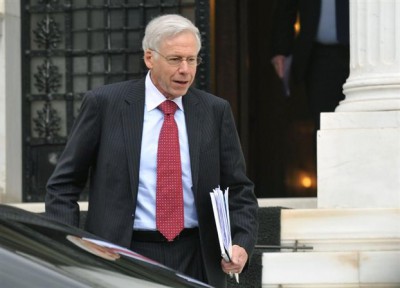
BEIJING (Reuters) - Greece should get cheaper rates on its 130 billion euro aid deal and at least two more years from the European Union and International Monetary Fund to repay them, the chief negotiator of the country's private sector creditors said on Tuesday.
But better terms could only come after Athens delivers on commitments it has made to fiscal reform, Charles Dallara, managing director of the Institute of International Finance (IIF), told a news conference while on a trip to Beijing.
"Once that has been done, and I am confident it will be done, Europe and the IMF should move quickly to extend the adjustment period for at least two years and provide the modest additional financial support for that extension to be effective," Dallara said.
Tuesday, 11 September 2012
Democracy loses in struggle to save euro
By Gideon Rachman

The European Central Bank has fired its magic bullet. By promising “unlimited” purchases of sovereign bonds, Mario Draghi, the ECB’s president, may have kept his pledge to do “whatever it takes” to save the euro. But in rescuing the currency, Mr Draghi’s magic bullet has badly wounded something even more important – democracy in Europe.
The European Central Bank has fired its magic bullet. By promising “unlimited” purchases of sovereign bonds, Mario Draghi, the ECB’s president, may have kept his pledge to do “whatever it takes” to save the euro. But in rescuing the currency, Mr Draghi’s magic bullet has badly wounded something even more important – democracy in Europe.
Saturday, 8 September 2012
Spinning Bad Financial News Into Good ~ Paul Craig Roberts
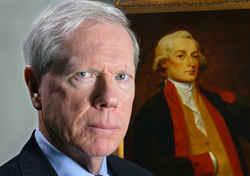
Friday’s payroll jobs report says that 96,000 new jobs were created in August and that the unemployment rate (U.3) fell from 8.3% to 8.1%. As 96,000 new jobs are not enough to keep up with population growth, the decline in the U.3 unemployment rate was caused by 368,000 discouraged job seekers giving up on finding employment and dropping out of the work force as measured by U.3. Discouraged workers are not included in the U.3 measure of unemployment, which makes the measure useless. The only purpose of U.3 is to keep bad news out of the news. the U.3 unemployment rate only measures those who have not been discouraged by the inability to find a job and are still actively seeking employment.
Thursday, 6 September 2012
Work Those Greeks! Advent of Modern Slavery?

EU Says Greeks Should Work Six-Day Week: Report ... In the leaked letter, reported in The Guardian newspaper, the European Commission, European Central Bank, andInternational Monetary Fund call for Athens to implement the measure as part of the bailout agreement with lenders. According to the paper, the letter states that more flexibility must be implemented to work schedules, including working into the weekend by increasing the number of maximum working days to six. The paper printed the following extract from the letter: "Increase the number of maximum workdays to six days per week for all sectors. Increase flexibility of work schedules; set the minimum daily rest to 11 hours; delink the working hours of employees from the opening hours of the establishment; eliminate restrictions on minimum/maximum time between morning and afternoon shifts; allow the consecutive two-week leave to be taken anytime during the year in seasonal sectors." – CNBC
To solve Greece crisis tightening should growth

Samaras, Greek Prime Minister’s trip to Germany and France, the recent results have been disappointing. The purpose of this trip is not to seek assistance, but rather to gain time. Samaras hopes the international community to give Greece more time to implement structural reforms. Short-term implementation of the excessive austerity, is bound to exacerbate the economic recession, resulting in further deterioration of the domestic situation. In this regard, Merkel appreciates the great sacrifices made by the Greek people to cut down the national debt and budget deficit, but refused to make concessions on the timing of reforms. Hollande reiterated its support for Greece to remain in the euro zone, and also asked Greece to honor its commitment to reform.
Monday, 3 September 2012
18 Indications That Europe Has Become An Economic Black Hole Which Is Going To Suck The Life Out Of The Global Economy

Summer vacation is over and things are about to get very interesting in Europe. Most Americans don't realize this, but much of Europe shuts down for the entire month of August. I wish we had something similar in the United States. But now millions of Europeans are returning from their extended family vacations and the fun is about to begin. During August economic conditions continued to degenerate in Europe, but I figured that it wouldn't be until after August that the European debt crisis would take center stage once again. And as I wrote about last week, if there is going to be a financial panic, it typically happens in the fall. The stock market has seen quite a nice rally over the summer, and many investors are nervous that we could see a significant "correction" very soon. The month of September has been the absolute worst month for stock performance over the past 50 years, and it has also been the absolute worst month for stock performanceover the past 100 years as well. Of course that does not guarantee that anything is going to happen this year. But things in Europe continue to get worse. Unemployment rates are spiking, manufacturing activity is slowing down, housing prices are crashing and major financial institutions are failing. What is happening in Europe right now appears to be an even worse version of what happened to the United States back in 2008.
But most Americans aren't too concerned about what is happening in Europe.
U.S. Companies Brace for an Exit From the Euro by Greece

By NELSON D. SCHWARTZ
Bank of America Merrill Lynch has looked into filling trucks with cash and sending them over the Greek border so clients can continue to pay local employees and suppliers in the event money is unavailable. Ford has configured its computer systems so they will be able to immediately handle a new Greek currency.
Friday, 31 August 2012
Relying Upon The European Numbers
Via Mark J. Grant, author of Out of the Box,

The Numbers
Our business revolves around the understanding of numbers and decisions based upon them. There is gaff, hype and fluff in great abundance, no doubt, but in the end the numbers generally tell a more accurate story. Most of us have been schooled to perform various analysis on the data presented and to draw conclusions from them but if the figures are inaccurate then, as the computer Geeks say, it is “garbage in and garbage out.”
Our business revolves around the understanding of numbers and decisions based upon them. There is gaff, hype and fluff in great abundance, no doubt, but in the end the numbers generally tell a more accurate story. Most of us have been schooled to perform various analysis on the data presented and to draw conclusions from them but if the figures are inaccurate then, as the computer Geeks say, it is “garbage in and garbage out.”
Sunday, 26 August 2012
How Europe's New Gold Standard Undermines Democracy

by Matthias Matthijs
While the whole world has been adopting a pragmatic consensus on economic policy since the Great Recession, Europe — and Germany in particular — is stubbornly sticking to a policy that has all the downsides of the old classical gold standard.
From the US to Russia and Japan, and from Brazil to India and China, the rest of the world has been careful to preserve substantial flexibility with its domestic fiscal and monetary policy levers. No such caution in continental Europe, where a "one size fits none" monetary policy by an independent central bank that cannot act as a true lender of last resort and a Brussels-imposed fiscal straightjacket that has not served a single euro member state well reign the day. Add to that the problem of intra-European financial markets with "national" regulatory institutions and the lack of a Europe-wide deposit insurance scheme or common debt instrument, and one can start to understand why the euro zone is going through an existential crisis with still no real end in sight.
Friday, 24 August 2012
Barack Obama asks eurozone to keep Greece in until after election day

US officials are worried that if Greece exits the eurozone, it will damage President's election hopes
The Obama administration will pressure European governments not to let Greece fall out of the eurozone before November's Presidential elections, British Government sources have suggested.
Representatives from the International Monetary Fund, the European Central Bank and the European Commission are due to arrive in Athens next month to assess Greece's reform efforts.
They are expected to report in time for an 8 October meeting of eurozone finance ministers which will decide on whether to disburse Greece's next €31bn aid tranche, promised under the terms of the bailout for the country.
American officials are understood to be worried that if they decide Greece has not done enough to meet its deficit targets and withhold the money, it would automatically trigger Greece's exit from the eurozone weeks before the Presidential election on 6 November.
Thursday, 23 August 2012
Alistair Darling Warns Germany To Change Course On Its Eurozone Rescue Policies Or Risk 1930s-Style Depression

Alistair Darling has strongly criticised the German government's policies towards recovery in the eurozone, suggesting a failure of leadership by Angela Merkel and other European politicians risks political upheaval similar to that seen in the 1930s.
In an interview with The Huffington Post UK the former Labour chancellor expresses his fears that European politicians will continue to kick the can down the road, despite predictions that the Greek debt crisis will come to a head in September.
Tuesday, 21 August 2012
Jacob Rothschild, John Paulson And George Soros Are All Betting That Financial Disaster Is Coming

Are you willing to bet against three of the wealthiest men in the entire world? Jacob Rothschild recently bet approximately 200 million dollarsthat the euro will go down. Billionaire hedge fund manager John Paulson made somewhere around 20 billion dollars betting against the U.S. housing market during the last financial crisis, and now he has made huge bets that the euro will go down and that the price of gold will go up. And as I wrote about in my last article, George Soros put approximately 130 million more dollars into gold last quarter. So will the euro plummet like a rock? Will the price of gold absolutely soar? Well, if a massive financial disaster does occur both of those two things are likely to happen. The European economy is becoming more unstable with each passing day, and investors all over the globe are looking for safe places to put their money. The mainstream media keeps telling us that everything is going to be okay, but the global elite are sending us a much, much different message by their actions. Certainly Rothschild, Paulson and Soros know about things happening in the financial world that the rest of us don't. The fact that they are all behaving in a consistent manner right now should be alarming for all of us.
Monday, 20 August 2012
Tension Over Aid to Greece Could Unsettle Markets

FRANKFURT — While the Greek prime minister,Antonis Samaras, will be greeted with military honors when he arrives in Berlin on Friday, his pleas for easier bailout terms could meet with a cool reception, setting up tension that could unsettle the financial markets this week.
Their summer vacations over, European political leaders appear to have resumed the maneuvering that has so often caused market turmoil and frustrated outsiders hoping for a quick solution to the euro zone debt crisis.
Another 2.5 Billion Euros Greek Shortfall Growing Ever Larger

The Greek prime minister has spent weeks searching for ways to come up with 11.5 billion euros to satisfy international conditions for emergency aid. Now, though, SPIEGEL has learned that the shortfall may be as much as 14 billion euros. German politicians are becoming increasingly exasperated.
Athens has not been having an easy time coming up with the €11.5 billion in cost cutting measures over the next two years it has promised Europe. Indeed, Greek Prime Minister Antonis Samaras is reportedly set to request an additional two years to make those cuts during meetings later this week with German Chancellor Angela Merkel on Friday and French President François Hollande on Saturday.
Sunday, 19 August 2012
History is not a straight line. What goes around, comes around.

On 16th November 2011, Volker Kauder, a close ally of German Chancellor Angela Merkel, warned Britain that it would not “get away with” looking after its own interests at the expense of Europe. He said European nations “are now speaking German in that they are backing Chancellor Merkel”.
1930′s fascists Hitler and Mosley had “Europe A Nation” as their slogan. Hitler’s 1942 “Europäische Wirtschaftsgemeinschaft” translates to “European Economic Community”. Foreign Minister Carl Clodius said at the time there would be a currency and customs union across Europe.
I don’t write this to join in the chorus of anti-German feeling about at the minute, but rather to make a much more intriguing point. There follow two news items from today:
Friday, 17 August 2012
EXCLUSIVE: Troika to accuse Greeks of building secret survival fund

Alarming French debt data shift eurozone balance of power back to Berlin
As the true extent of Greek ally France’s short-term debt problemscame to light, French sources today reported that the Troika will produce “a damning report” on Greek austerity and debt repayment progress….alleging in particular that Athens is building a ‘survival fund’ to give it greater bargaining power. This muddies the waters still further in relation to the European tour of Greek Prime Minister Antonis Samaras next week: Berlin now looks to be in a stronger position than previously.
Events make fools of us all. Last Saturday, The Slog nailed its colours to the mast of an inevitable German exit from the eurozone. I still think the odds are very much on that outcome, but one or two developments in the last 36 hours have moved things back into the realms of possibility for a Merkeschäuble triumph against those odds. For the risk investor, these are the most significant ones helping Germany:
What Mr Draghi should be aiming at: Or how to move from Ponzi Austerity to Rational Crisis Management by a stepwise implementation of the Modest Proposal
What Mr Draghi should be aiming at: Or how to move from Ponzi Austerity to Rational Crisis Management by a stepwise implementation of the Modest Proposal
Ponzi growth happens when unsustainable capital flows, wilfully predicated upon funding schemes that Reason knows to be fraudulent, give rise to large spurts of economic activity.
Ponzi austerity, in contrast, is what happens when unsustainable spending cuts, wilfully predicated upon funding schemes that Reason knows to be fraudulent, cause significant drops in economic activity. (Click here for my original piece on Ponzi Growth and how it led to Ponzi Austerity.)
It is an incontestable fact that Europe’s Periphery shifted from Ponzi growth to Ponzi austerity some time after the Crash of 2008. Before the Crash, tsunamis of toxic money, minted and multiplied by US, UK and German banks, flooded the Periphery, causing bubbles in the real estate and public sectors. When that toxic money fizzled out, and capital receded from the Periphery like a vicious tide going out on a grim shore, the Periphery’s states and banks sunk deeply in the mud of irreversible insolvency. So as to delay the inevitable defaults that would strike huge blows on the tittering northern banks, so-called bailouts were arranged on condition of austerity policies that were as unsustainable as the growth whose collapse led to them.
Ponzi growth happens when unsustainable capital flows, wilfully predicated upon funding schemes that Reason knows to be fraudulent, give rise to large spurts of economic activity.
Ponzi austerity, in contrast, is what happens when unsustainable spending cuts, wilfully predicated upon funding schemes that Reason knows to be fraudulent, cause significant drops in economic activity. (Click here for my original piece on Ponzi Growth and how it led to Ponzi Austerity.)
It is an incontestable fact that Europe’s Periphery shifted from Ponzi growth to Ponzi austerity some time after the Crash of 2008. Before the Crash, tsunamis of toxic money, minted and multiplied by US, UK and German banks, flooded the Periphery, causing bubbles in the real estate and public sectors. When that toxic money fizzled out, and capital receded from the Periphery like a vicious tide going out on a grim shore, the Periphery’s states and banks sunk deeply in the mud of irreversible insolvency. So as to delay the inevitable defaults that would strike huge blows on the tittering northern banks, so-called bailouts were arranged on condition of austerity policies that were as unsustainable as the growth whose collapse led to them.
Subscribe to:
Posts (Atom)