Friday, 7 December 2012

Monday, 26 November 2012
Gunter Grass poem: “Shame of Europe” (Europas Schande)

Shame of Europe [aka Europe’s Disgrace]
Close to chaos, because the market is not just, you’re far away from the country which was your cradle.
What was searched and found with one’s soul, is now considered to be as worthless as scrap metal.
As a debtor put naked on the pillory, a country about which you used to say you were grateful, suffers.
Poverty doomed country whose maintained wealth adorns museums of the loot you kept.
Those* who hit the country, blessed with islands, with the force of arms wore both uniforms and Holderlin^ in their knapsacks.
Barely tolerated country whose colonels were once tolerated by you as an alliance partner.
Country which lost its rights, whose belt is tightened and tightened again by the cocksurely powerful.
Antigone defying you wearing black and all over the country, the people whose guest you have been wear mourning clothes.
However, outside the country, the Croesus resembling followers have hoarded all what glitters like gold in your vaults.
Booze at last, drink! [European] Commissioners’ cheerleaders shout.
However, Socrates gives you back the [hemlock poison] cup full to the brim.
Curse you as a chorus, which is characteristic of you, will the gods, whose Mount Olympus you want to steal.
You’ll waste away mindlessly without the country, whose mind invented you, Europe.
* World War II German Nazi occupation soldiers
Sunday, 25 November 2012


Wednesday, 14 November 2012
Bank lobby chief Dallara in favor of giving Greece more lenient deficit reduction targets

ATHENS, Greece — Greece needs more lenient targets to reduce its budget deficit so that its economy can return to growth more quickly, the head of an international banking lobby said Wednesday.
Charles Dallara, managing director of the Institute of International Finance, said the 17 eurozone countries should find a better balance between policies that favor debt reduction and those that help growth.
An over-emphasis on budget cuts will cause the risk of a “protracted era” of recession or low-growth, he warned at a banking event in Athens.
Greece is approaching its sixth year of recession as it keeps cutting spending and raising taxes to comply with the demands of its international bailout.
“It’s my view that everything must be done to avoid this reality,” Dallara said of the deepening recession. “What is needed instead in my view is to ease the case of fiscal adjustment.”
Dallara led negotiations with Greece earlier this year to restructure the country’s debt held by the private sector, wiping some €100 billion off the national debt.
Despite that writedown, Greece’s debt load is still not falling quickly enough.
Its bailout creditors — the 16 other eurozone states and the International Monetary Fund — agreed in principle to give Greece more time to complete its current austerity measures, from 2014 to 2016. But they are still divided over whether to give Greece more time — until 2022 rather than the currently planned 2020 — to bring its debt down to a manageable level of 120 percent of GDP.
To help Greece, Dallara argued that the International Monetary Fund could increase its contribution in the bailout program and provide concessional rates reserved for poorer countries.
He said Greek governments had shown “impressive willingness to bear short-term pain for long-term gain” in passing a major new round of austerity cuts, approved last week and worth €13.5 billion ($17 billion).
Copyright 2012 The Associated Press. All rights reserved. This material may not be published, broadcast, rewritten or redistributed.
Tuesday, 13 November 2012
Sunday, 30 September 2012
How The Government’s Lies Become Truth
Dr. Paul Craig Roberts
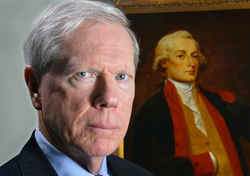
In my last column, “A Culture of Delusion,” I wrote that “Americans live in a matrix of lies. Lies dominate every policy discussion, every political decision.” This column will use two top news stories, Iranian nukes and Julian Assange, to illustrate how lies become “truth.”
The western Presstitute media uses every lie to demonize the Iranian government. On September 28 in a fit of unmitigated ignorance, the UK rag, Mail Online, called the president of Iran a “dictator.” The Iranian presidency is an office filled by popular election, and the authority of the office is subordinate to the ayatollahs. Assange is demonized alternatively as a rapist and a spy.
Friday, 28 September 2012
14 Signs That The World Economy Is Getting Weaker

The United States is not the only one with massive economic problems right now. The truth is that just about wherever you look around the globe things are getting even worse. China is experiencing a substantial economic slowdown, and Japan has resorted to yet another round of money printing in an effort to keep the Japanese economy moving. Unemployment in Europe continues to get even worse, and the riots this week in Spain and in Greece have been absolutely frightening at times. In the United States there are a whole host of signs that another recession is approaching, and the number of American CEOs that say that they plan to eliminate jobs in the coming months is rapidly rising. The world economy is more interconnected today than ever before, and that means that we are all in this together. Just remember what happened back in 2008 and 2009. The economic pain that started on Wall Street was felt in every corner of the planet. So anyone that believes that the United States (or any other major nation for that matter) is going to escape the next wave of the economic crisis is simply not being realistic. Why do you think central banks all over the world are in "panic mode" right now? They are firing all of their ammunition and printing money like there is no tomorrow in an attempt to keep the system together. Unfortunately, it is not going to work.
Thursday, 27 September 2012
A Culture of Delusion
A writer’s greatest disappointments are readers who have knee-jerk responses. Not all readers, of course. Some readers are thoughtful and supportive. Others express thanks for opening their eyes. But the majority are happy when a writer tells them what they want to hear and are unhappy when he writes what they don’t want to hear.
For the left-wing, Ronald Reagan is the great bogeyman. Those on the left don’t understand supply-side economics as a macroeconomic innovation that cured stagflation by utilizing the impact of fiscal policy on aggregate supply. Instead, they see “trickle-down economics” and tax cuts for the rich. Leftists don’t understand that the Reagan administration intervened in Grenada and Nicaragua in order to signal to the Soviets that there would be no more Soviet expansion or client states and that it was time to negotiate the end of the cold war. Instead, leftists see in Reagan the origin of rule by the one percent and the neoconservatives’ wars for US hegemony.
Wednesday, 26 September 2012
Quantitative Easing Did Not Work For The Weimar Republic Either

Did printing vast quantities of money work for the Weimar Republic? Nope. And it won't work for us either. If printing money was the secret to economic success, we could just print up a trillion dollars for every American and be done with it. The truth is that making everyone in America a trillionaire would not mean that we would all suddenly be wealthy. There would be the same amount of "real wealth" in our economy as before. But what it would do is render our currency meaningless and totally destroy faith in our financial system. Sadly, we have not learned the lessons that history has tried to teach us. Back in April 1919, it took 12 German marks to get 1 U.S. dollar. By December 1923, it took approximately 4 trillion German marks to get 1 U.S. dollar. So was the Weimar Republic better off after all of the "quantitative easing" that they did or worse off? Of course they were worse off. They destroyed their currency and wrecked all confidence in their financial system. There was an old joke that if you left a wheelbarrow full of money sitting around in the Weimar Republic that thieves would take the wheelbarrow and they would leave the money behind. Will things eventually get that bad in the United States someday?
Of course we are not going to see hyperinflation in the U.S. this week or this month.
But don't think that it will never happen.
The people of Germany never thought that it would happen to them, but it did.
Tuesday, 25 September 2012
QE4? The Big Wall Street Banks Are Already Complaining That QE3 Is Not Enough

QE3 has barely even started and some folks on Wall Street are already clamoring for QE4. In fact, as you will read below, one equity strategist at Morgan Stanley says that he would not be "surprised" if the Federal Reserve announced another new round of money printing by the end of the year. But this is what tends to happen when a financial system starts becoming addicted to easy money. There is always a deep hunger for another "hit" of "currency meth". Federal Reserve Chairman Ben Bernanke was probably hoping that QE3 would satisfy the wolves on Wall Street for a while. His promise to recklessly print 40 billion dollars a month and use it to buy mortgage-backed securities is being called "QEInfinity" by detractors. During QE3, nearly half a trillion dollars a year will be added to the financial system until the Fed decides that it is time to stop. This is so crazy that even former Federal Reserve officials are speaking out against it. For example, former Federal Reserve chairman Paul Volcker says that QE3 is the "most extreme easing of monetary policy" that he could ever remember. But the big Wall Street banks are never going to be satisfied. If QE4 is announced, they will start calling for QE5. As I noted in a previous article, quantitative easing tends to pump up the prices of financial assets such as stocks and commodities, and that is very good for Wall Street bankers. So of course they want more quantitative easing. They always want bigger profits and bigger bonus checks at the end of the year.
USA to continue its wars as long as dollar remains reserve currency

Pravda.Ru interviewed Paul Craig Roberts, an American economist, who served as an Assistant Secretary of the Treasury in the Reagan Administration and became a co-founder of Reaganomics – the economic policies promoted by the U.S. President Ronald Reagan during the 1980s. We asked Mr. Roberts to share his views about the current state of affairs inside and outside the United States.
Pravda.Ru: Mr. Roberts, you are known in Russia as the creator of Reaganomics, which helped the country overcome stagflation. What were the key aspects of that policy and how would you estimate its results today? Do you think your faith in free market has shattered?
Paul Craig Roberts: Free market means the freedom of price to adjust to supply and demand. It does not mean the absence of regulation of human behavior.
Reaganomics was a political word for supply-side economics, a new development in economic theory. In the post World War 2 western world, governments used Keynesian demand management economic policy to control inflation and to boost employment. John Maynard Keynes was the British economist who explained the Great Depression in the West as a consequence of insufficient aggregate demand to maintain full employment and stable prices.
Monday, 24 September 2012
WORLD WITHOUT TORTURE: THE RESPONSIBILITIES OF THE WEST
Paul Craig Roberts was interviewed by Nilantha Ilangamuwa, editor of Torture, a print and online magazine published by the Asian Human Rights Commission based in Hong Kong and the Rehabilitation and Research Centre for Torture Victims in Denmark. Torture: Asian and Global Perspectives is a new initiative which focuses on torture and its related issues globally. Writers interested in having their research on this subject published, may submit their articles totorturemag@ahrc.asia
TORTURE
August 2012
WORLD WITHOUT TORTURE: THE RESPONSIBILITIES OF THE WEST
Dr. Paul Craig Roberts was educated at Georgia Tech, the University of Virginia, the University of
California, Berkeley, and Oxford University where he was a member of Merton College. He has been the Assistant Secretary of the US Treasury in the Reagan administration, a member of the US Congressional staff, an associate editor and columnist for the Wall Street Journal, and a columnist for Business Week, the Scripps Howard News Service, and Creators Syndicate. He was also a Senior Research Fellow for the Hoover Institution at Stanford University and was appointed to the William E. Simon Chair in Political Economy at Georgetown University’s Center for Strategic and International Studies. He is currently the chairman of the Institute for Political Economy and has authored or coauthored ten books and numerous articles in scholarly journals. He has testified before committees of Congress on 30 occasions. Dr. Roberts was awarded the US Treasury’s Meritorious Service Award for “outstanding contributions to the formulation of US economic policy,” and France’s Legion of Honor as “the artisan of a renewal in economic science and policy, after half a century of state interventionism.”
Greece Caught Underreporting Its Budget Deficit By Nearly 50%
There was a time about a year ago, before the second Greek bailout was formalized and the haircut on its domestic-law private sector bonds (first 50%, ultimately 80%, soon to be 100%) was yet to be documented, when it was in Greece's interest to misrepresent its economy as being worse than it was in reality. Things got so bad that the former head of the Greek Statistics Bureau Elstat, also a former IMF employee,faced life in prison if convicted of doing precisely this.
A year later, the tables have turned, now that Germany is virtually convinced that Europe can pull a Lehman and let Greece leave the Eurozone, and is merely looking for a pretext to sever all ties with the country, whose only benefit for Europe is to be a seller of islands at Blue Aegean water Special prices to assorted Goldman bankers (at least until it renationalizes them back in a few short years). So a year later we are back to a more normal data fudging dynamic, one in which Greece, whose July unemployment soared by one whole percentage point, will do everything in its power to underrepresent its soaring budget deficit.
Americans Are Literally Being Worked To Death

Are you constantly tired and do you feel incredibly stressed almost all the time? Well, that means that there is a really good chance that you are a typical American worker. Even though our incomes are going down, Americans are spendingmore time at work than ever before. In fact, U.S. workers spend more time at work than anyone else in the world. But it was not always this way. Back in 1970, the average work week for an American worker was about35 hours. Today, it is up to 46 hours. But there are other major economies around the globe that are doing just fine without burning their workers out. For example, the average American worker spends 378 more hours working per year than the average German worker does. Sadly, for many Americans work is not even finished once they leave the office. According to one recent survey, the average American worker spends an extra seven hours per week on work tasks such as checking emails and answering phone calls after normal work hours have finished. Other Americans are juggling two or three jobs in a desperate attempt to make ends meet. Americans are busier than ever and work is often pushing the other areas of our lives on to the back burner. What this also means is that "family vacations" are becoming increasingly rare in the United States. In fact, Americans spend less days on vacation than anyone else in the industrialized world. While some would applaud our "work ethic", the truth is that the fact that we are being overworked is having some very serious consequences. In fact, as you will see below, Americans are literally being worked to death.
Friday, 21 September 2012
Subscribe to:
Posts (Atom)